Friday, July 16, 2010

spiritual practices


This week I'm thinking of the spiritual practice of walking. And it's led me to think about spiritual practices in general. My understanding is that a spiritual practice is something that we do that allows God to work in us. I usually think of a spiritual practice as something like centering prayer or praying the psalms, but reading Barbara Brown Taylor’s An Altar in the World is encouraging me to think more broadly.
A spiritual practice is not like a diet or working out at the gym or learning Spanish, where you know that if you do x (eat less, exercise more, study 30 minutes a day) than y will result (lose weight, get in shape, know Spanish). The results of a spiritual practice are not predictable or instantaneous, they can’t be scheduled. When I do a spiritual practice, I don’t know what God will do or how God will do it or when it will happen.
Trust. Wait. Do the practice whether I like it or not, whether it is rewarding or not, whether I see “results” or not. Trust that God can and will work in me.

Wednesday, May 5, 2010


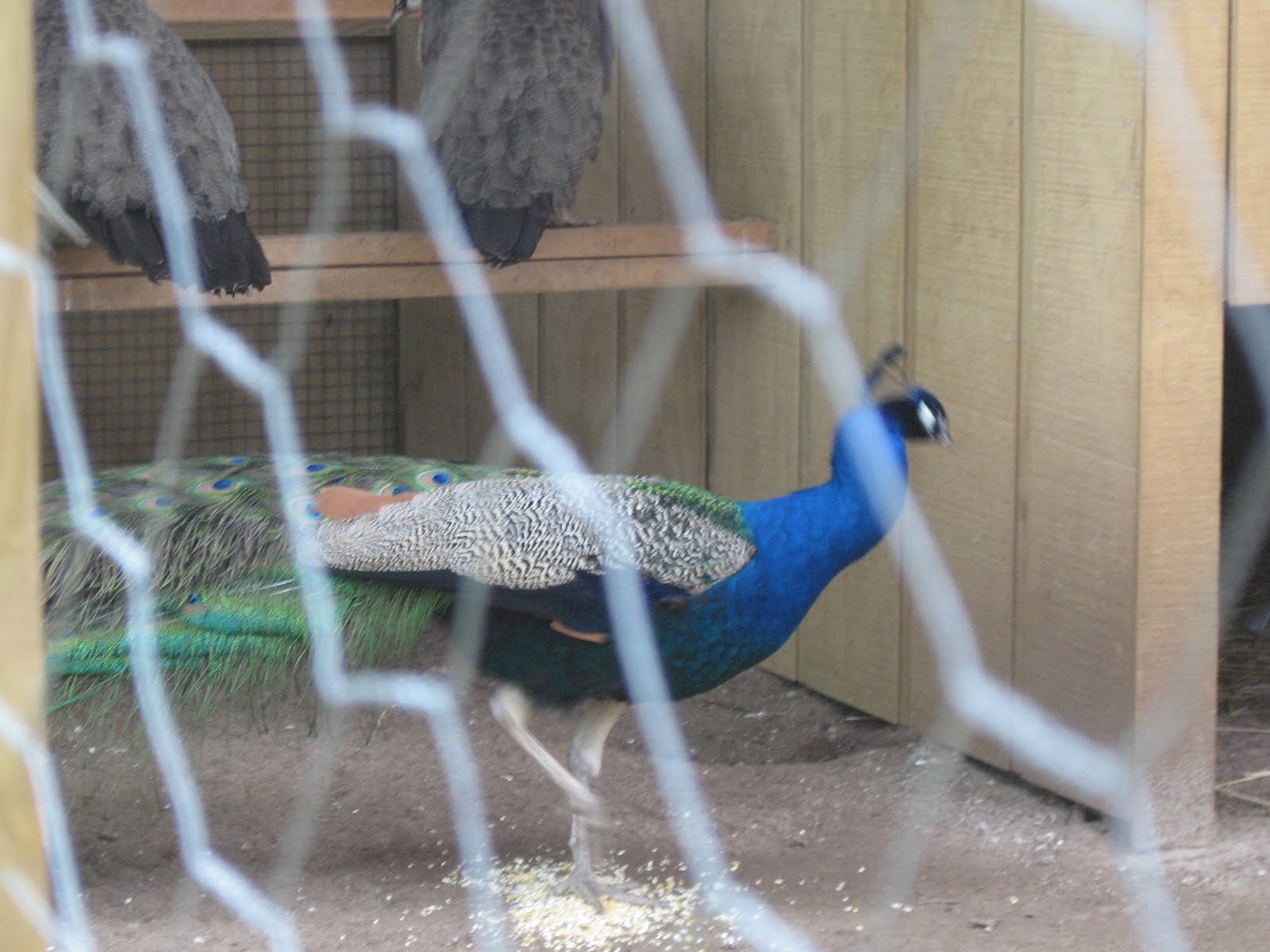
Three more photos from Andalusia:
one of the out buildings on the farm - sad to see that several barns are not being preserved or maintained at all.
a peacock - so beloved by O'Connor, at one time she had over 100 peafowl on the place. She loved all fowl, as a matter of fact - sometime I'll tell you the home economics class story.
her bedroom - perhaps originally a parlor, it's to your immediate right as you come in the front door. You can see her crutches propped up against the wardrobe. Her actual desk and typewriter are at Georgia College and State University in town (yes, we saw them, too). The rooms are dark, almost dreary, but in the sweltering hot Georgia summers, I'm imagining that would make it seem cooler.

I'm a Red Sox fan


I just read an interview with Dustin Pedroia about his teammate, David Ortiz. Of course, everyone’s wondering and talking and speculating about what kind of future Ortiz has with the sort of painful shows he’s been making lately.
Here’s a bit of what Pedroia said: “David’s fine. He’s one of our teammates. It could have been me…It happens to everybody…Relax. I’m tired of looking at the NESN poll… David’s fine. We believe in him… He’s going to come out of it…Papi’s fine.”
How great to play with a team that believes in you and has your back and encourages you. Wouldn’t it be great if we all could play on such a team? Wouldn’t it be great if the church were a team like that, where we had each others' backs and looked for the best in each other?

Wednesday, April 28, 2010

Andalusia


Last week we went on a pilgrimage of sorts. Or, I should say, I went on a pilgrimage and Stewart patiently indulged me. We were going to Alabama to visit his mother, but we first made an overnight detour from the Atlanta airport to Milledgeville, GA to Andalusia, the farm where Flannery O’Connor lived during her most productive years of writing (from age 26 until her death at 39).
Andalusia is a most unextraordinary place. A very simple farmhouse – O’Connor and her mother moved here from a more grand place in town, where they had lived with a wealthy cousin. Flannery had inherited the farm from an uncle and the house allowed them to live on one floor – a necessity as her lupus began to restrict her mobility.
The house is simple, the furnishings unremarkable. What a contrast to O’Connor’s inner world, which was populated with grotesque freaks and misfits. She led a quiet and conventional life – many people in the community couldn’t believe that she was the author of the stories that bore her name. Who knows the forces, inner and outer, that shape a person’s imagination and character.

Wednesday, March 10, 2010

in the bulb there is flower: update


Yellow and blue crocus are blooming.

Luke 23:39-43
“One of the criminals who were hanged there kept deriding him and saying, ‘Are you not the Messiah? Save yourself and us!’ But the other rebuked him, saying, ‘Do you not fear God, since you are under the same sentence of condemnation? And we indeed have been condemned justly, for we are getting what we deserve for our deeds, but this man has done nothing wrong.’ Then he said, ‘Jesus, remember me when you come into your kingdom.’ He replied, ‘Truly I tell you, today you will be with me in Paradise.”
Two criminals, side by side with Jesus. Strangers, all three, but all suffering the same slow and painful death. One of them says, scornfully: aren’t you the Messiah? If you are, save yourself and us!
But the other criminal scolds him and says to Jesus: Remember me when you come into your kingdom. And to this one, Jesus says, “Yes. I will.”
Both of them ask the same thing, don’t they? Save me! But one, scornful, demanding, wanting proof, distances himself from Jesus. The other reaches out to Jesus in reliance and hope and trust. And Jesus, knowing nothing of this criminal but what is revealed in his asking, reaches back. Yes. Today you will be with me in paradise.
In one sense, it’s an almost ridiculous scene. One condemned and dying criminal turning to another and asking to be saved. And yet, in that moment, we find hope.
It is in our reaching out, in our asking, in our reliance and hope and trust, that we experience that today – right now – we are with Jesus. The moment when our hearts are open and our hands are empty, then we are able to receive the presence of Christ.